They did it by shortening shifts and lengthening the site list. Four hundred cases across three weekends works out to roughly one hundred thirty three cases per weekend, and no troop moves that volume from two tables staffed all day. This troop ran more sites for fewer hours each, capped every shift at two hours, and set a per family case quota that most parents could satisfy in a single Saturday morning.
The total parent hours went down because the old model wasted them. A six hour Saturday at a slow site burns twelve adult hours and sells maybe thirty cases. Three two hour shifts at three good sites burn the same twelve adult hours and sell considerably more, because every one of those hours lands inside a store's own traffic peak instead of straddling the dead middle of the afternoon.
What follows is a walk through the decisions in the order they were made. Treat the numbers as a worked example with stated assumptions rather than a benchmark: your site mix and your local price per package will move them.
The starting position: troop size, goal and inventory model
Twenty two registered members across two age levels. Sixteen families actively participating, because several members were siblings and two families had opted out of selling entirely. A troop goal of four hundred cases, chosen because the prior season had cleared just under three hundred and the leaders wanted a stretch that was reachable rather than aspirational.
The inventory model was the standard council arrangement: the troop signs for cases at a cupboard pickup, the troop is financially responsible for every case signed for, and unsold product cannot be returned once it leaves the cupboard. That last clause is what governs everything else. Cases are not stock, they are debt until they sell.
So the leaders split the four hundred into a committed block and a reserve. Two hundred and eighty cases were assigned out to families and booth shifts at the start. The remaining one hundred and twenty were pulled in stages from the cupboard as sales data justified them.
Keep reading: Where is youth fundraising heading as fewer families carry cash to a booth?
How they picked and ranked booth sites
Site selection was a ranking exercise, not a scramble for whatever was left on the council reservation system. Four factors, scored before any shift was posted:
| Factor | What they looked at | Why it mattered |
|---|---|---|
| Foot traffic timing | When the store's own rush happens, observed in person | A grocery entrance at 10am Saturday is a different site than the same door at 3pm |
| Shopper intent | Grocery and warehouse over hardware and banks | People leaving with food in hand buy food |
| Table position | Inside vestibule, outside entrance, or set back from the door | Set back from the door roughly halves the interaction rate |
| Weather exposure | Covered or open sidewalk | An uncovered February site is a coin flip on whether the shift happens at all |
They ended with six sites they would work repeatedly and three they took only if a prime slot was unavailable. The discipline was in refusing the fourth tier. A weak site does not merely sell less, it costs two screened adults and three members for the same two hours a strong site would have used.
Shift length and the two hour rotation they settled on
They started the season at three hour shifts and cut to two after the first weekend. The argument for two hours is simple. Members lose their pitch around the ninety minute mark, and a bored ten year old sitting behind the table converts far worse than an engaged one standing in front of it.
Two hours also opens the schedule to parents who would never claim a half day. A Saturday from 9am to 5pm is four two hour shifts. Staffed at two adults and three members each, that is eight adult slots per site per day, and eight parents doing two hours is far easier to fill than four parents doing four.
The rotation inside the shift ran in twenty minute blocks: one member on the pitch at the front of the table, one on product handoff, one on the money and card reader, then rotate. Every member touched every job, which is the part of the program that is actually about the members.
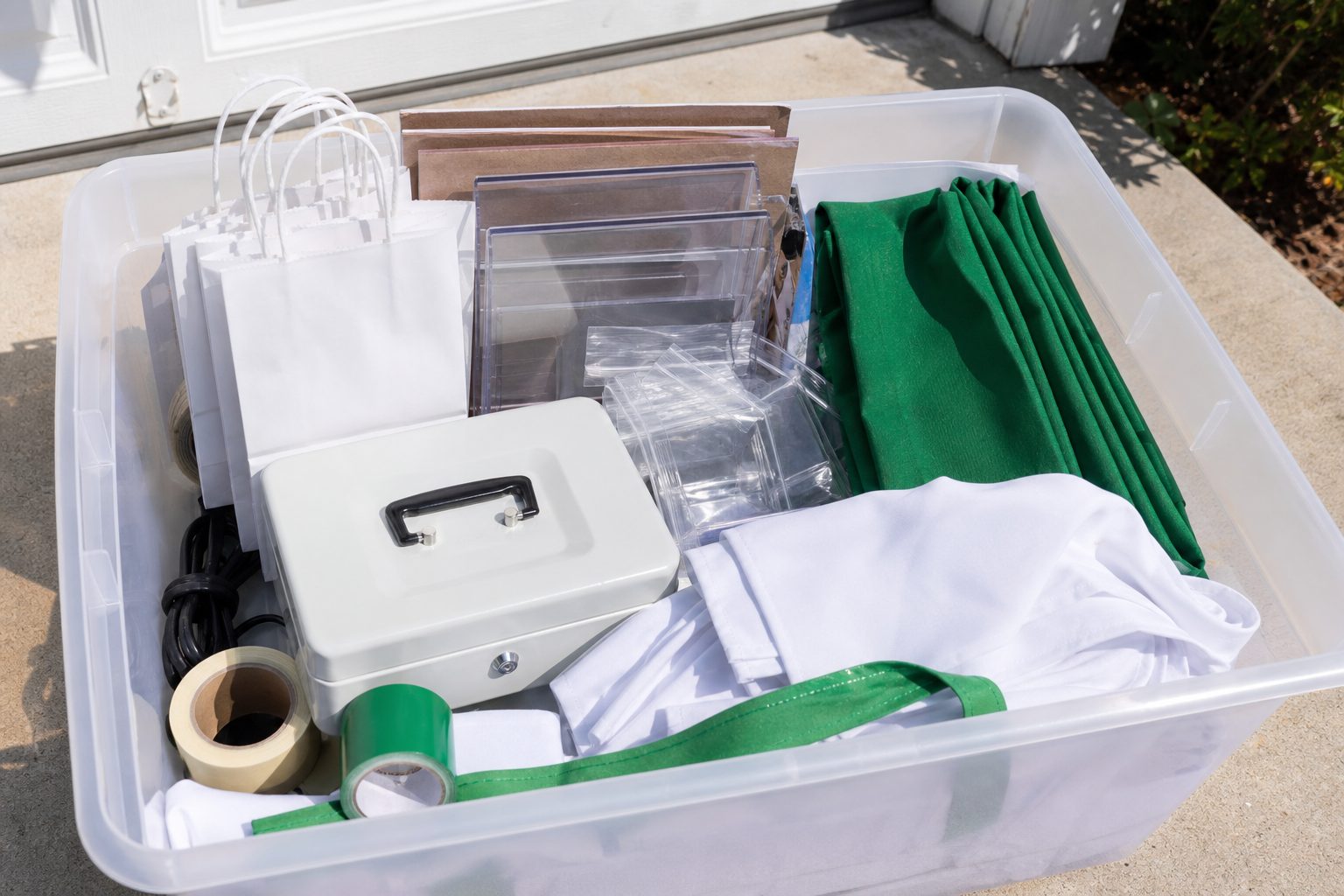
Keep reading: What should be in my booth kit box before I load the car on Saturday morning?
Per family case quotas and how opt outs were handled
Four hundred cases across sixteen participating families is twenty five cases each, but a flat quota fails immediately because families are not interchangeable. So they weighted it.
- Base quota of eighteen cases per participating family, covering individual order card sales plus booth shifts worked.
- A booth shift credit: each two hour shift a family worked reduced its individual quota by two cases, capped at four shifts.
- Families with two selling members carried one and a half times the base rather than double, because siblings share a customer network.
- Opt out was allowed without explanation, declared in writing before the first pickup, and moved that family's share into the booth pool rather than onto one enthusiastic parent.
The written opt out before pickup is the load bearing rule. An opt out declared in week three leaves cases already signed for and already in someone's garage.
Restock runs and who carried the reserve
One family volunteered as the reserve carrier, meaning roughly forty cases lived in their vehicle and garage across each weekend, with a second family as backup. Every case transferred out of that reserve was recorded at the moment of handoff, with the receiving adult's name and the count by variety.
Restock runs happened on a trigger, not a schedule: any site down to its last two cases of the top two sellers called the carrier. Two runs on a typical Saturday, one mid morning and one early afternoon.
The rule that kept the books clean was that nothing moved car to car without being logged. Untracked transfers between parents are the single largest source of end of season variance, and they are almost never theft. They are memory.
See how TroopBooth handles this for youth troop and club fundraising
What they cut after the first weekend
Three things went after weekend one.
The three hour shift, as covered. The two weakest sites, replaced by doubling up on the strongest with a second table at a different entrance. And the paper tally sheet, which had produced two shifts where the cash count and the case count told different stories.
The tally sheet was replaced with a per shift record entered at the table: cases out, cases returned, cash in, card total from the reader. Four numbers. The reconciliation rule was that cases sold multiplied by the package price should equal cash plus card, and any shift where that gap exceeded five dollars got resolved that night while the shift lead still remembered the twenty she broke for a customer.
Final numbers and what they would change next season
Take the assumptions above and the arithmetic runs like this. Sixteen participating families at eighteen base cases is two hundred eighty eight cases of individual and shift credited responsibility. Booth shifts across three weekends, six sites, an average of three staffed shift days per weekend, filled the rest and carried the troop past four hundred.
Parent hours tell the better story. At two hours per shift and two adults per shift, a weekend of nine shifts costs thirty six adult hours. Across three weekends that is one hundred eight adult hours spread over sixteen families, under seven hours per family for the entire booth season.
What they would change: book the top three sites earlier, since the best slots go in the first hour reservations open. Set the reserve carrier before the first pickup rather than during it. And stop allowing shift swaps by text, because two of the season's three coverage scares came from a swap that only two people knew about.
Running this in your own troop
The transferable parts are the ranking sheet for sites, the two hour rotation, the weighted quota with shift credit, and the four number per shift reconciliation. None of them require a bigger troop. They require that the numbers live in one place that every parent can see.
That is what TroopBooth handles: shift signup by site and time block, cases assigned and transferred per member with a logged handoff, sales reconciled per shift against cash and card, and a parent facing balance that shows each family exactly where their quota and their money stand.