A February booth shift outside a grocery store is two hours of short bursts separated by quiet. You set up in fifteen minutes, you sell most of what you will sell in two rush windows, you spend the rest keeping three cold children engaged and the product dry, and you finish with a count that has to match what you started with. That is the honest shape of it.
What follows is one shift, told straight through, from a 9:45 arrival for a 10:00 start at a suburban supermarket entrance in the last week of February. The specifics are ordinary on purpose. The point is not drama, it is the rhythm, so that a leader running her first winter booth knows what normal feels like and does not mistake a slow twenty minutes for failure.
Arrival, site check and setup in the first fifteen minutes
You arrive early because the previous shift, if there was one, is counting down, and because you need to find out which entrance you are actually allowed to use. Store managers move booths. The spot approved in November may now be occupied by a propane cage.
The first three minutes are a site check. Which way do the automatic doors swing, and where is the cart return? You want to be past the doors on the exit side, out of the cart path, not blocking the accessible parking route. Shoppers going in are focused on a list. Shoppers coming out have already spent money and have hands free once the cart is loaded.
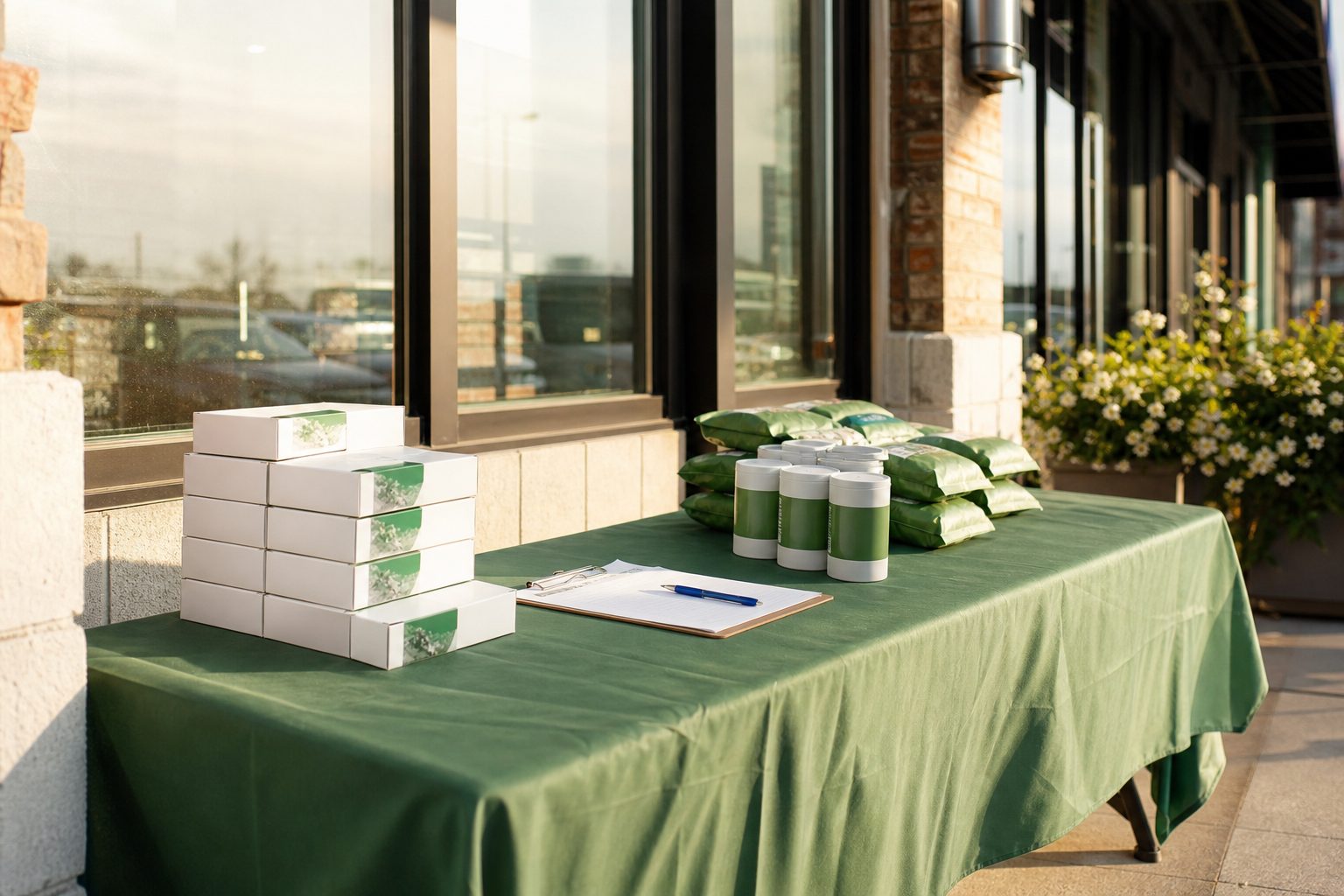
Then the table goes up, the vinyl cloth gets clipped at four corners, and the sign goes into its frame with a water jug behind it. Product gets stacked in two low rows rather than one tall one, because a tall stack in wind is a decision you make once.
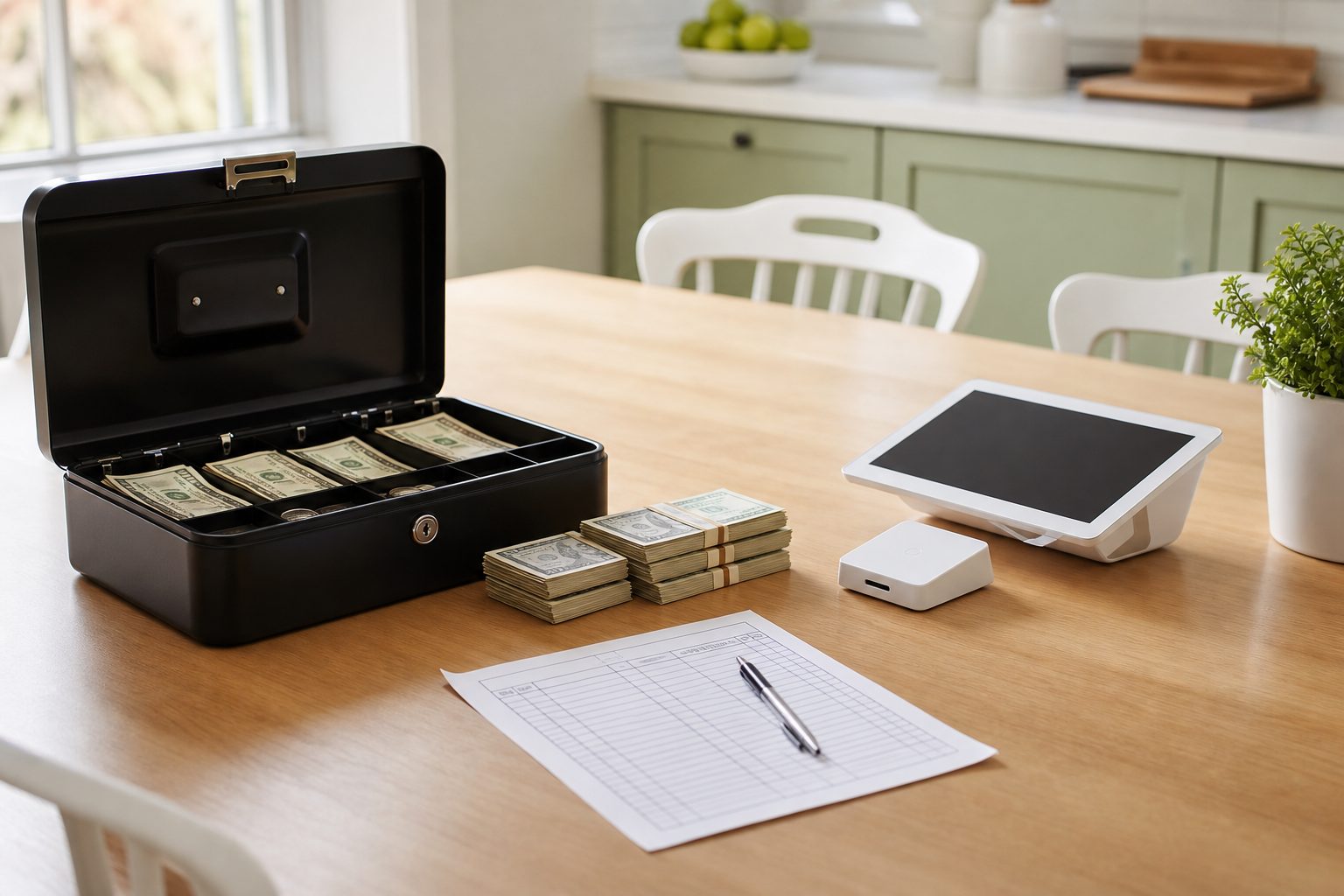
Last, before 10:00, the cash box opens and the starting bank gets counted out loud with the second adult watching. Forty dollars in ones and twenties in fives, written on the sheet, signed by both. Ninety seconds, and it removes the entire category of end of shift arguments.
Keep reading: How do I set up a booth sale permit and site agreement before our first weekend?
Traffic patterns across a Saturday morning
Ten to ten thirty is thin. The early shoppers arrived before you did and are already leaving with a purposeful stride. Expect a handful of transactions and do not read anything into it.
Ten thirty to eleven fifteen is the first real window. Families arrive, and families are your customer. A parent with two kids in the cart will stop because the kids stop.
Eleven fifteen to eleven forty is a dip. Use it. This is when you restock the table from the reserve in the car, tally what has moved, and rotate a girl out for a snack.
Eleven forty to noon is the second window and often the strongest. The pre lunch crowd is out, and word of mouth from the morning has done a little work. If you are going to run short on a variety, it happens here.
The pattern shifts by store and by region, which is why you write down the transaction count by half hour. After three shifts at one site you stop guessing.
Handling the pitch rotation among members
Three girls on a two hour shift works as three roles rotated every forty minutes: greeter, product handler, and break. The greeter stands one step in front of the table, not behind it. Behind the table is a wall.
The greeting line matters more than anything else at the booth. "Would you like to buy cookies" invites the word no. A line that assumes the sale and offers a choice does better: naming two varieties and asking which one, or asking whether they are buying for themselves or for the office.
Older girls handle money, younger ones hand over product and say thank you. Adults stay a step back and let the girls talk. The instinct to rescue a nine year old mid sentence is strong and you should resist it, because the pause she is having is the part where the skill forms.
Rotate on a timer, not on a feeling. Forty minutes in cold air is genuinely as long as a child can hold a pitch, and a girl who is rotated before she wilts comes back willing.
Keep reading: What is the real difference between council issued inventory and consignment for our troop?
Running low and calling the restock driver
Around eleven you notice that the two best selling varieties are down to a few packages while the others have barely moved. This is normal and it is the moment for the restock call.
Have a designated restock driver on call before the shift starts, with the cupboard product at their house and their phone on. The call has a script: the varieties needed, the number of cases, the entrance you are at, and the time you need it by. Vague requests produce the wrong varieties.
When the restock arrives, count it in on the count sheet before it touches the table. Product added mid shift that was never logged is the single most common cause of a shift that will not reconcile. Two lines on the sheet, initialed, and the problem is gone.
If restock is not possible, move the remaining varieties forward and change the pitch. A depleted top seller is a chance to genuinely recommend something else, and shoppers respond to a girl who says which one she likes.
Weather, wind and keeping product sellable
Cold is manageable. Wind and damp are what cost you money.
- Wind lifts the tablecloth and takes the sign. Clip the cloth at four corners and weight the sign base before you need to.
- Damp cardboard is unsellable. Keep the bottom row of any stack off the ground on a crate or a closed bin lid, never directly on concrete.
- Keep the tarp folded on the table edge, not in the trunk. When rain starts you have about forty seconds.
- Hand warmers go in early, not once fingers are already numb. Rewarming a cold hand takes far longer than keeping it warm.
- The reader battery drains faster in cold. Keep the phone in an inside coat pocket between transactions.
- Watch the girls for the quiet stage of being cold. A child who stops talking is a child who needs the car heater for ten minutes.
See how TroopBooth handles this for youth troop and club fundraising
Counting down and documenting the shift total
At five minutes to noon, selling stops. Announce it, because a girl in the middle of a good pitch will not want to.
The count down runs in a fixed order:
- Count remaining packages by variety and write them on the count sheet.
- Add the restock lines and subtract remaining from total received. That difference is packages sold.
- Count the cash box. Remove the starting bank and set it aside intact.
- Everything above the bank is cash sales. Count it twice, with the second adult confirming.
- Read the card total from the reader app for the shift window and write it down.
- Check the arithmetic: packages sold multiplied by package price should be close to cash plus card. A small gap usually means a donation or a rounding, and a large gap means a counting error you should find now, not tonight.
Photograph the signed sheet before you put it away. Cold hands lose paper.
Handing off to the next family without losing count
The incoming adult should arrive ten minutes early and stand with you through the count, not take your word for it. This is not distrust, it is how two families avoid ever having to discuss it later.
Hand over the remaining product with the count sheet showing the number both of you just confirmed. Hand over the site items, the table, the sign and the tape. Keep your own cash envelope, sealed and labeled with the date, site, shift time and both adult names, and deliver it to the troop treasurer the same day if you can.
Tell the incoming family what you learned: which varieties are gone, which entrance side worked, whether the manager came out, when the rush hit. Two sentences of that is worth more to them than anything in the bin.
Then bag the trash, wipe the table, and go get warm.
Making the next shift easier than this one
Every shift produces four things worth keeping: packages sold by variety, cash, card, and what you noticed. Most of that is lost by Monday unless it goes somewhere permanent the same afternoon.
TroopBooth is built for exactly that stretch of the season. Shifts get filled from a signup instead of a group text, cases are tracked per member so a mid shift restock is a logged line rather than a memory, and the cash and card totals reconcile into a parent facing balance sheet as you go. Log this Saturday's shift while the count sheet photo is still on your phone, and the next family walks up to a booth that already knows what happened at it.