You set up a booth sale in this order: get the property owner's written permission first, then submit the site to your council for approval inside their posted window, then check whether the location is public right of way and needs a city permit, and only then post the shift signup. Reversing that order is how troops end up with a full roster of parents and no legal place to stand.
The short version for a typical grocery store or bank branch parking lot: the property is private, so the store manager or property management company is the only permission that matters legally, and your council is the body that decides whether the location is allowed and whether another troop already claimed that date. No city permit is usually involved. The city only enters the picture when your table touches a public sidewalk, a park, a transit plaza or a street festival footprint.
Give yourself two weeks between asking and standing there. Most of that time is not paperwork, it is waiting for a district manager to answer an email.
What a booth sale legally is on private property versus public right of way
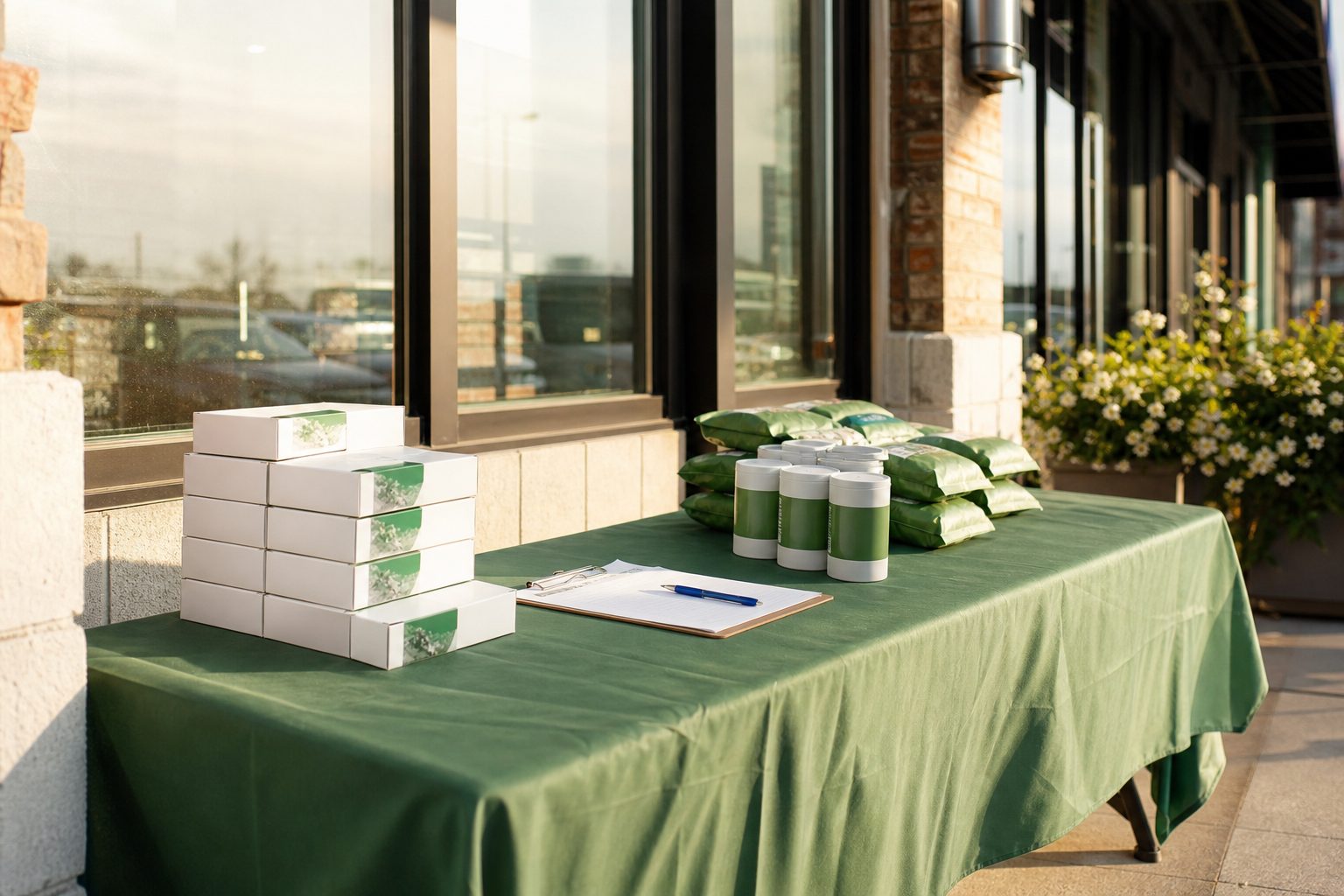
A booth sale is a temporary sales table operated by a chartered youth group. The legal question is not what you are selling, it is whose land you are standing on.
On private commercial property, a parking lot, a vestibule, the strip of concrete in front of a storefront, you are there as an invited guest of the owner. The owner can set conditions, revoke permission, tell you to move ten feet, or cancel the morning of. There is no municipal license to obtain because no public land is being occupied. What you need is permission from someone with actual authority to grant it, which is often not the person in the store.
On public right of way, sidewalks, plazas, park paths, the space in front of a public library or a post office, the city or county controls the use. That is where a temporary use permit, vendor permit or special event permit language starts to apply. It is also where a fire lane or ADA clearance requirement can end a booth in one visit from a code officer.
The gray zones worth knowing
- Post offices. Federal property. Solicitation on USPS grounds is generally not permitted regardless of what a friendly postmaster says.
- Bank branches and credit unions. Private, but many have corporate policies that route approval through a regional office, not the branch manager.
- Big box stores. Private, but national solicitation calendars often lock the schedule months out and cap how many groups per weekend.
Keep reading: What is the real difference between council issued inventory and consignment for our troop?
Getting store or property manager permission in writing
Verbal yes from a shift supervisor is worth nothing at 9 a.m. on a Saturday when a different supervisor is on. Get the permission on paper, and get it from someone whose title includes manager, general manager, or property manager.
A workable permission form fits on one page and states the location address, the exact door or lot section, the date, the start and end time, the number of youth and adults expected, the group name and charter, a contact cell number, and a line for the manager's printed name, signature and date. Keep a photo of the signed form on the phone of every adult scheduled that weekend.
Two details that prevent most conflicts. First, name the physical spot, "east entrance, right of the cart corral," not just the address, because two troops can both hold valid permission for the same store on the same day at different doors. Second, write down what the manager said about placement rules: no blocking the automatic door sensor, no tables in fire lanes, no amplified sound, no signs on the building.
Council approval windows and why they close early
Your council runs the booth scheduling system, and the reason it closes early is not bureaucracy. Councils negotiate with regional chains at the corporate level, then release those approved locations to troops in rounds. Once the rounds open, the good weekend morning slots at high traffic stores go in minutes.
Typical structure, and you should confirm the specifics against your own council's posted calendar rather than assuming:
- Corporate locations round. Stores the council already cleared. Troops pick from a list, often with a cap of one or two slots per troop in the first pass.
- Open round. Remaining corporate slots, no cap, first come.
- Troop secured round. A location your own troop arranged, submitted for council approval before it counts.
A troop secured site still needs council sign off, because the council carries the insurance and does not want two troops at the same address or a location that conflicts with a corporate agreement. Submit it as soon as you have the signed permission form. Waiting a week because you want to "confirm the parents can cover it" is how you lose the slot to another troop who submitted first.
Keep reading: Which money handling mistakes cost troops the most at the end of a season?
When a city or county sidewalk permit actually applies
Ask three questions about the exact patch of ground where the table legs will sit.
- Is the ground maintained by the municipality? If a city crew plows it or repairs it, it is right of way.
- Will the table narrow the walkway below the accessible clear width? Pedestrian routes generally need a continuous clear path, and a folding table plus a line of customers eats it fast.
- Is money changing hands on that ground? Some cities regulate sales on public property differently from leafleting or a static display.
If any answer points to public land, call the city clerk or the business licensing desk and ask specifically for the rule that covers a nonprofit youth group temporary sale. Ask three things: is a permit required, what is the lead time, and is there a fee waiver for registered nonprofits. Write down the name of the person who answered and the date. That note is what you show the code officer.
Nonprofit sales tax exemption and vendor rules by state
This is the part most new leaders get wrong, because the rule is set at the state level and differs meaningfully across state lines.
Broadly, states handle youth fundraising sales in one of a few ways. Some exempt occasional fundraising sales by qualifying nonprofit organizations entirely. Some treat the council as the seller and have the tax handled upstream in the per package price, so the troop collects a flat price and remits nothing. Some require collection and remittance under the organization's own permit. And a few require a temporary seller's permit for any sales activity, nonprofit status notwithstanding.
You do not need to become an expert. Ask your council product program manager one question in writing: "Is sales tax included in the package price we charge, and does our troop have any filing obligation?" Keep the emailed answer. If the troop does have an obligation, ask which state form and which deadline.
Never quote a customer a price plus tax at a booth unless your council explicitly tells you to. Booth pricing is a single round number for a reason: making change fast in a line of twelve people.
See how TroopBooth handles this for youth troop and club fundraising
Insurance certificates a property manager may request
Larger property management companies and most national chains will ask for a certificate of insurance, a COI, naming them as additional insured. Your troop does not issue this. Your council does, through its general liability carrier.
What the request needs from you, and what to gather before you email your council:
| Item requested | Where you get it | Lead time to allow |
|---|---|---|
| Certificate of insurance | Council office or member support | 5 to 10 business days |
| Exact legal entity name for additional insured | Property manager, in writing | Same day if you ask directly |
| Mailing address for the certificate holder | Property manager | Same day |
| Coverage limits required | Property manager's vendor policy | 1 to 3 days |
| Date range to cover | You, from your booth schedule | Immediate |
The lead time is the reason this belongs at the front of your two week runway. A COI request submitted on a Wednesday for a Saturday booth will not land in time, and the property manager will simply not let you set up.
A two week checklist before the first shift
Work backward from your first booth date.
- Day 14. Confirm council approval window dates and whether troop secured sites are allowed this season. Draft your one page permission form.
- Day 13 to 11. Contact target locations. Ask for the manager by name, ask who approves solicitation, and ask whether a COI is required.
- Day 10. Request the certificate of insurance from council for every site that asked for one. Include the exact entity name and address.
- Day 9 to 8. Collect signed permission forms. Photograph each one and store it where every adult volunteer can reach it.
- Day 7. Submit troop secured sites to council for approval. Confirm no address conflicts.
- Day 6. If any site touches public sidewalk or park land, call the city clerk. Record the answer and the name.
- Day 5. Publish shift signups. Two adults minimum per shift, and set the ratio your council requires for youth per adult.
- Day 4. Confirm inventory: cases assigned, who is transporting, where the product is stored overnight.
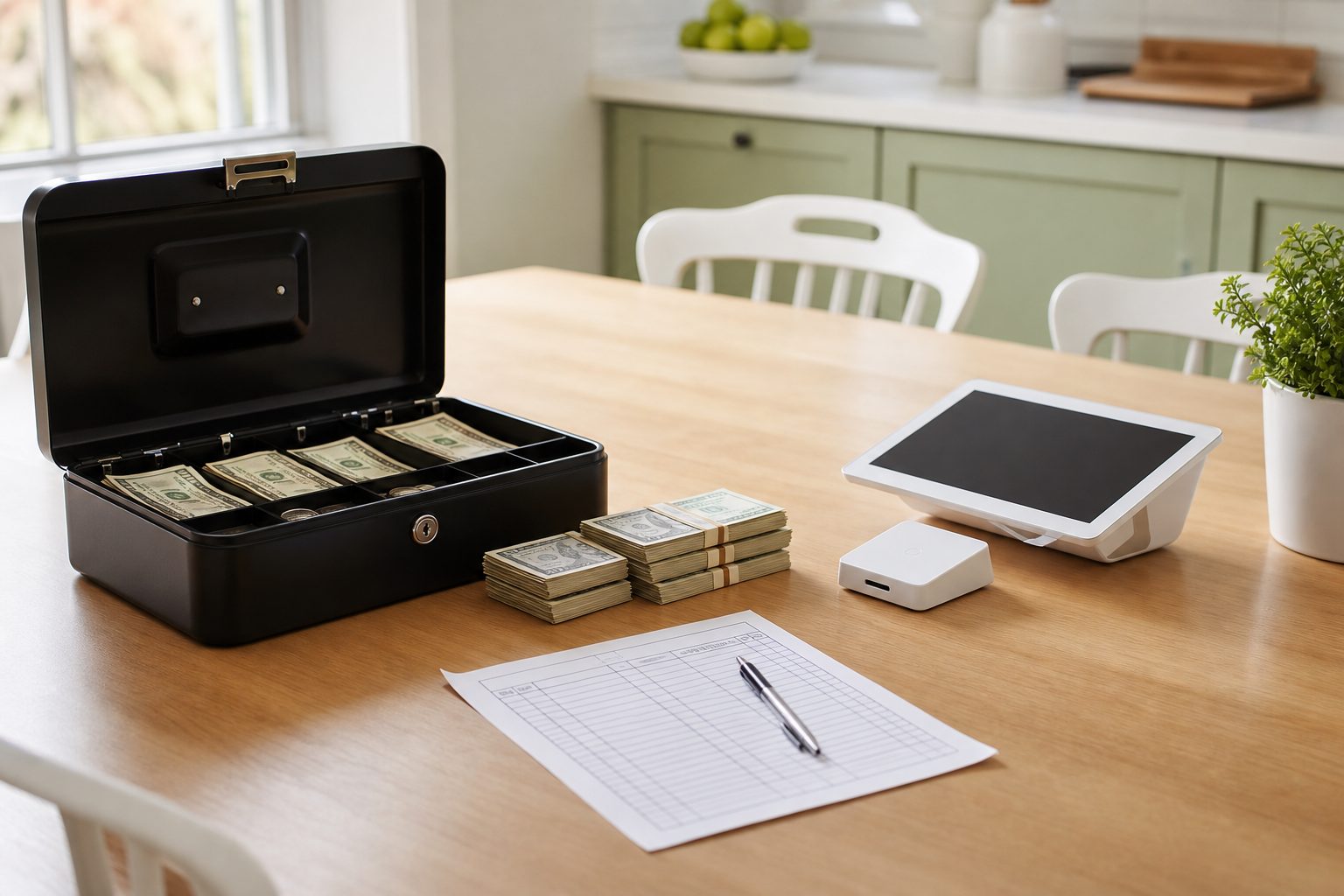
- Day 3. Card reader charged and tested with a one dollar live transaction. Cash box seeded with a documented starting bank, small bills and a roll of quarters.
- Day 2. Send every scheduled adult the site address, the exact spot, the manager's name, the permission photo, the COI if applicable, and the start and end time.
- Day 1. Weather check. Confirm a rain plan with the property manager, which usually means canceling rather than moving indoors.
Keeping all of it in one place
None of the above is difficult on its own. It gets hard because permission forms live in one inbox, the shift roster lives in a group text, the inventory count lives on a legal pad in your car, and the COI lives in a reply you cannot find.
TroopBooth keeps the booth schedule, the shift signups, the case assignments per member and the money side in one place, so the adult who shows up Saturday morning already has the site details and the starting cash count on their phone. Set your locations up once, and the season stops depending on which parent remembers what.